


There is something uniquely calming about ending a long travel day in Japan with a warm outdoor bath surrounded by mountain air, quiet streets, or falling snow. While many travelers initially visit for the food, culture, and city atmosphere, hot spring experiences often become the most memorable part of the journey.
For travelers looking for a proper hotel onsen japan experience, the options today are far more diverse than traditional countryside ryokan stays alone. Modern hotels, private bath accommodations, and urban wellness retreats can now be found across major destinations including Hokkaido, Kyoto, and smaller mountain towns throughout the country.
Some visitors prefer remote hot spring villages with quiet surroundings, while others enjoy staying in cities that combine contemporary comfort with traditional Japanese bathing culture. Either way, onsen travel has become one of the defining parts of exploring Japan in a slower and more immersive way.
Why Onsen Stays Feel Different From Regular Hotels
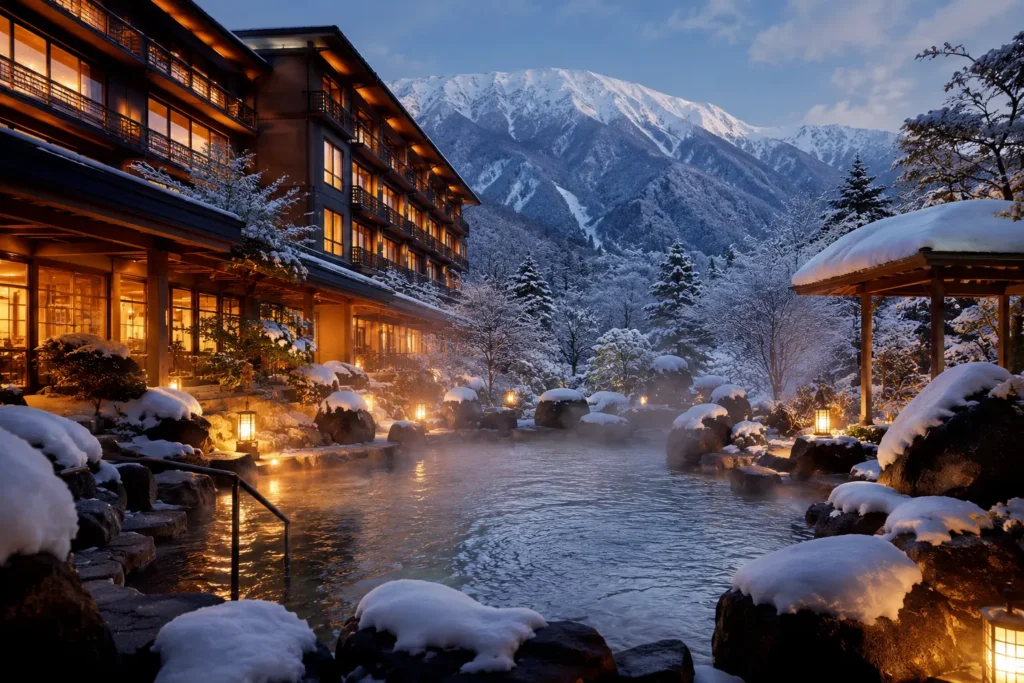
Unlike standard accommodations, many Japanese hot spring stays focus heavily on atmosphere and relaxation rather than only convenience. The experience itself often becomes part of the trip instead of simply a place to sleep.
Traditional bath areas are commonly designed around seasonal scenery. During winter, outdoor baths surrounded by snow create a completely different mood compared to spring or autumn visits. In mountain regions, travelers often spend more time inside the bathing areas than inside the room itself.
- Open-air baths with natural scenery
- Private soaking areas for couples or families
- Traditional Japanese hospitality
- Locally inspired seasonal meals
- Quiet environments away from crowded tourist districts
Some travelers also combine wellness-focused stays with nearby cultural attractions, ski destinations, or food experiences. In northern Japan, especially around Hokkaido, winter travel and hot spring culture naturally complement each other.
Read Also: Things to Do in Sapporo During Winter
Choosing Between a Ryokan and a Modern Japan Onsen Hotel
One common misconception is that every japan onsen hotel follows the same traditional ryokan style. In reality, accommodations vary significantly depending on the region, target travelers, and overall travel experience.
Traditional ryokan usually focus on tatami rooms, kaiseki dining, and a slower cultural atmosphere. Meanwhile, modern hotels often combine larger rooms, city access, contemporary amenities, and private bath facilities while still preserving Japanese wellness elements.
| Accommodation Type | Typical Experience |
|---|---|
| Traditional Ryokan | Cultural stay with tatami rooms and classic baths |
| Modern Onsen Hotel | Contemporary comfort with wellness facilities |
| Private Onsen Retreat | More secluded and intimate atmosphere |
Travelers visiting major destinations for the first time often explore luxury accommodations and sapporo luxury hotels with relaxing wellness experiences that balance accessibility, winter scenery, and modern Japanese comfort. This is especially true in larger areas where transport convenience still matters during multi-city trips.
Read Also: Complete Japan Travel Guide for First-Time Visitors
Private Bath Experiences Becoming More Popular
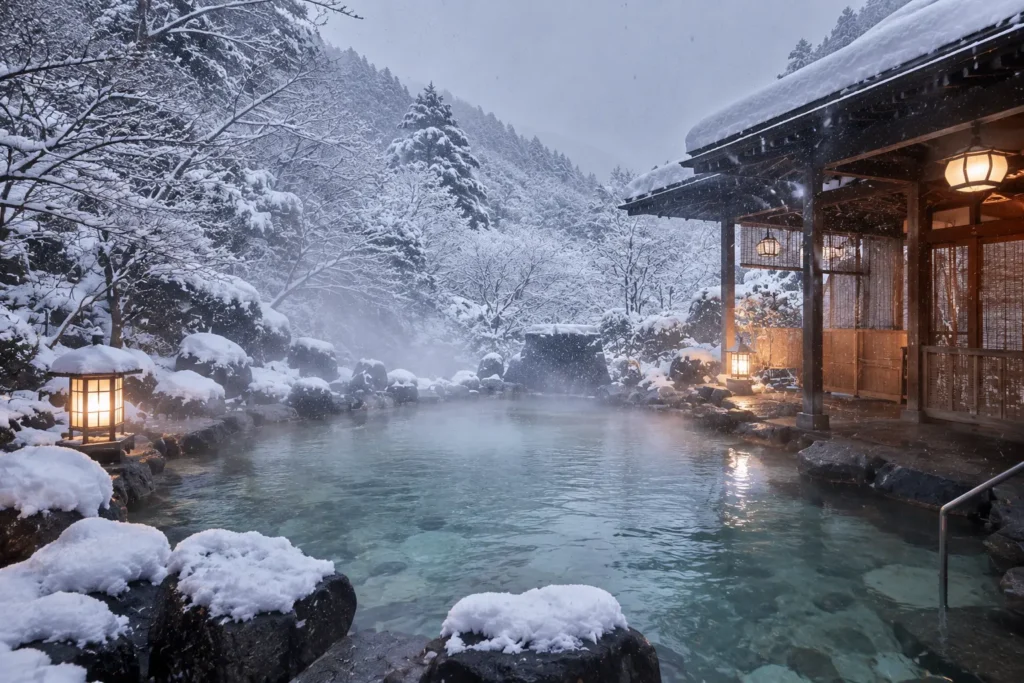
In recent years, demand for a japan hotel with private onsen experience has increased among international travelers. Many visitors now prefer more personal bathing spaces, especially couples, honeymoon travelers, and families wanting a quieter environment.
Private baths are available in several formats. Some accommodations offer fully open-air baths attached directly to guest rooms, while others provide reservable bathing spaces shared between guests on a scheduled basis.
The appeal is not only privacy but also flexibility. Travelers can enjoy the atmosphere without worrying about crowded communal areas, particularly during colder months when outdoor baths become more attractive.
- Room-integrated outdoor baths
- Mountain-view soaking areas
- Wooden traditional bath designs
- Snow-viewing rotenburo experiences
- Quiet evening bathing atmosphere
Many japan private onsen hotel options are also located in scenic regions where the surrounding nature becomes part of the experience itself.
Some of the Most Memorable Onsen Regions Across Japan
Travelers searching for an onsen hotel japan experience often focus too heavily on accommodations alone, even though the surrounding destination plays an equally important role.
Different regions offer completely different atmospheres. Mountain towns provide a slower pace and scenic landscapes, while urban wellness hotels deliver easier access to shopping districts, restaurants, and transportation hubs.
- Hokkaido for snowy winter scenery and outdoor baths
- Kyoto for cultural surroundings and traditional stays
- Nagano for mountain hot spring villages
- Kusatsu for classic sulfur spring experiences
- Beppu for diverse geothermal bath culture
In northern Japan, winter travelers often combine skiing, seasonal seafood, and hot spring experiences into one itinerary. The colder climate naturally enhances the atmosphere of open-air bathing.
Read Also: Hokkaido Winter Travel Guide for Snow Season Visitors
What Many Travelers Look for in the Best Onsen Hotel in Japan
Different travelers naturally prioritize different things when searching for the best onsen hotel in japan. Some value privacy and luxury amenities, while others care more about scenery, local culture, or traditional architecture.
However, several factors appear consistently across highly rated stays:
- Natural atmosphere and quiet surroundings
- Well-maintained bath facilities
- Comfortable room design
- Seasonal food experiences
- Convenient transportation access
- Authentic Japanese hospitality
For many visitors, the emotional atmosphere matters more than luxury branding itself. A smaller mountain property with beautiful scenery can sometimes leave a stronger impression than larger commercial hotels.
Travelers planning longer trips also tend to combine wellness stays with regional exploration instead of staying in one destination for the entire journey.
Read Also: Best Ryokan in Japan for Traditional Stay Experiences
Planning the Right Season for an Onsen Trip
Seasonality changes the entire mood of an onsen experience. Winter remains the most iconic period thanks to snow-covered landscapes and colder outdoor temperatures, but other seasons offer their own advantages.
| Season | Typical Atmosphere |
|---|---|
| Winter | Snow scenery and dramatic outdoor baths |
| Spring | Cherry blossom surroundings and mild weather |
| Summer | Green mountain scenery and quieter travel periods |
| Autumn | Colorful foliage and cooler temperatures |
Travelers researching the best time to visit japan often discover that onsen destinations can completely change depending on weather conditions and regional climate.
Some mountain towns become especially attractive during autumn foliage season, while northern regions are heavily associated with winter travel experiences.
FAQ About Onsen Travel in Japan
Are private baths common in Japan?
Yes. Many accommodations now provide reservable or in-room private bathing options, especially in areas popular with international travelers.
Do all onsen accommodations feel traditional?
No. Some properties focus heavily on traditional ryokan culture, while others combine modern hotel comfort with wellness facilities.
Is winter the best season for hot spring travel?
Winter is extremely popular because of snowy outdoor scenery, but spring and autumn also provide beautiful seasonal atmospheres depending on the region.
A Slower Way to Experience Japan
For many travelers, visiting hot spring destinations becomes less about luxury itself and more about slowing down during the journey. Quiet mountain air, seasonal scenery, and warm mineral baths create a completely different pace compared to busy city travel.
Whether choosing a countryside ryokan, a modern private bath retreat, or a contemporary wellness-focused stay in northern Japan, the experience often becomes one of the most memorable parts of traveling across the country.
As more travelers continue exploring regional destinations beyond Tokyo and Osaka, onsen culture remains one of the experiences that consistently defines the atmosphere of Japan in a deeper and more personal way.