


A well-planned Labuan Bajo Tour should not be treated like a race to tick Padar, Komodo Island, Pink Beach, and Manta Point off a list. The better approach is to let weather, currents, sailing time, and guest priorities shape the route. Komodo National Park covers 219,322 hectares and includes Komodo, Rinca, and Padar alongside numerous smaller islands, so the experience is naturally spread across a large marine landscape. Flexibility is not a compromise; it is part of good itinerary design.
Why Should the Sea Shape Your Route?
The sea determines what is comfortable, efficient, and rewarding on any Labuan Bajo Tour. A route that looks simple on a map can feel different once wind, swell, currents, anchorage conditions, and travel time are considered.
UNESCO notes that Komodo National Park has strong marine currents and coral-rich waters. Those currents help support the park’s marine ecosystems, but they also mean timing matters for snorkeling, diving, and boat movement. A skilled crew may change the order of stops so guests arrive when conditions are more suitable rather than simply following a fixed sequence.
How Do Weather and Sailing Time Change the Day?
Weather affects more than whether the sky is blue. It can influence departure times, crossing comfort, visibility, hiking conditions, and which side of an island offers better shelter.
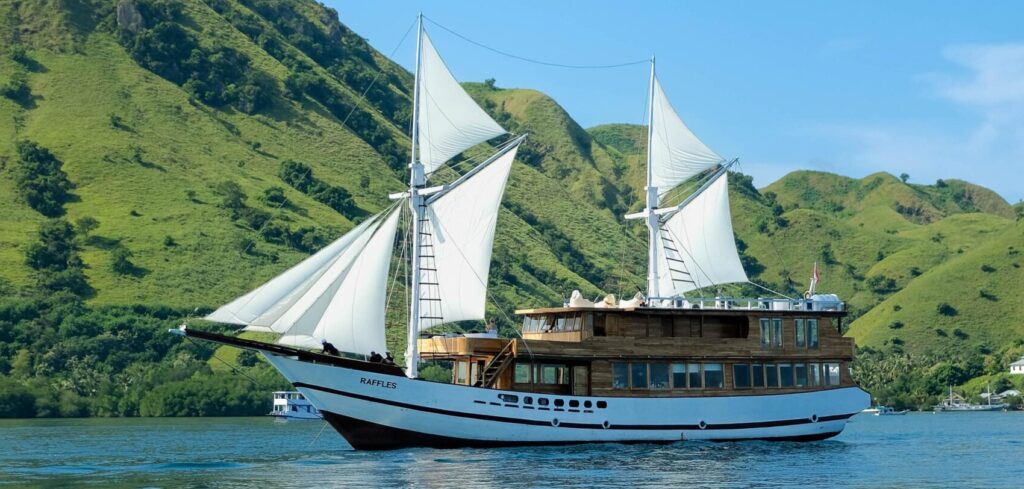
Indonesia’s official tourism portal describes Labuan Bajo as the primary gateway to Komodo National Park and notes that boat journeys from the marina to parts of the park can take around three to four hours, depending on the vessel and sea conditions. It identifies the western Flores dry season as roughly mid-April to mid-October and notes that rainy-season conditions can disrupt boat schedules.
For a Labuan Bajo trip, this means a smart itinerary leaves enough margin to respond to the day instead of forcing every stop into a fixed timetable.
Why Do Currents Matter for Snorkeling and Diving?
Komodo’s currents are one reason its underwater world is so dynamic. UNESCO highlights the rapid exchange of nutrient-rich water around the park and the presence of strong currents, alongside rich coral reefs and diverse marine life.
For guests interested in diving Komodo, the right site at a particular hour may depend on current direction and strength. The same principle applies to Komodo snorkeling and Komodo National Park snorkeling. A guide may recommend changing the order of sites, waiting for a more suitable window, or choosing a protected alternative.
That flexibility can make the difference between simply reaching a famous site and actually enjoying it.
Why Distance Matters More Than a Long Checklist
Trying to fit too many islands into one day can create more time in transit and less time experiencing each place. A good route balances sailing with meaningful time in the water, on the beach, or on land.
A Komodo boat tour might combine a sunrise hike, wildlife encounter, snorkeling session, and sunset anchorage, but not every highlight needs to happen on the same day. Travelers comparing a Komodo cruise or a fast day boat should consider not only how many stops are advertised, but also how much time is realistically available at each one.
Travelers researching Komodo island tours from Bali should also remember that Labuan Bajo is the main gateway for reaching the national park by sea. Indonesia’s official tourism portal identifies Labuan Bajo as the closest airport gateway and starting base for boat travel into Komodo.
Should You Choose a Day Trip, Open Trip, or Liveaboard?
The right format depends on how much flexibility, privacy, and time you want.
An open trip Labuan Bajo can suit travelers who prefer a shared schedule and an accessible way to see major highlights. A private Labuan Bajo Tour package can offer more control over pace and priorities. A liveaboard Labuan Bajo experience gives guests more time at sea, while a Komodo liveaboard can reduce the need to return to town each evening and allow the route to progress through the archipelago.
For travelers seeking greater privacy and space, a yacht Labuan Bajo charter can make it easier to adapt meals, activities, anchorages, and daily routing around the group.
The important question is not which format has the longest checklist. It is which format best matches the way you want to travel.
What Should a Flexible Itinerary Prioritize?
A strong itinerary begins with a few non-negotiable experiences, then builds around conditions. One group may care most about Padar at sunrise and seeing Komodo dragons. Another may prefer quiet bays, underwater photography, or longer snorkeling sessions.
Instead of promising exactly the same order every day, an experienced operator can assess conditions and decide when to move, when to stay longer, and when an alternative site may offer a better experience.
This also creates room for spontaneous moments: an unexpectedly calm bay, excellent visibility, wildlife activity, or a sunset anchorage worth extending.
Flexibility does not mean having no plan. It means having a researched plan with intelligent alternatives.
Why Is Flexibility Better Than Following a Checklist?
A checklist measures a journey by how many places were visited. A flexible itinerary looks at the quality of each experience.
If conditions are especially good at a snorkeling site, spending longer there may be more rewarding than rushing to another island simply because it appears next on the schedule. Similarly, if wind or currents make one area less comfortable, changing the order of the day can create a smoother journey without sacrificing the main highlights.
This approach is particularly valuable in an archipelago where activities range from trekking through dry savannah landscapes to exploring coral-rich waters shaped by strong marine currents.
Plan Around the Experience, Not the Checklist
Komodo National Park is too varied to reduce to a sequence of photo stops. Its scale, strong currents, marine biodiversity, volcanic islands, reefs, and changing marine conditions reward travelers who allow the journey to breathe.
When comparing itineraries, ask how the operator handles weather changes, how much sailing is involved, whether activities can be reordered, and how the route is adapted to guest interests. Those questions reveal far more than the number of destinations printed on a brochure.
A thoughtful Labuan Bajo Tour follows the rhythm of the sea while keeping the experiences that matter most at the center of the journey. Explore Hello Flores itineraries and start planning a route designed around the way you actually want to experience Komodo.